AI Content Checker: The Complete Guide for 2026 (Tools, Accuracy & Use Cases)
Discover what AI content checkers are, how they work, and which tools actually deliver. Compare top detectors including Slop Detector, GPTZero, and Originality.ai.

AI Content Checker: The Complete Guide for 2026
With AI writing tools generating millions of words daily, distinguishing human-crafted content from machine-generated text has become essential for educators, publishers, and SEO professionals. An AI content checker is now a standard tool in content quality workflows, not an optional add-on. A 2025 study by Stanford HAI found that over 40% of text submitted to major academic platforms contains detectable AI-generated content, up from under 5% in 2022.
This guide covers what AI detection tools do, how they work, which features matter most, and a practical comparison of the leading solutions, including our own Slop Detector.
What Is an AI Content Checker?
An AI content checker is a specialized software tool that analyzes text to determine whether it was written by a human or generated by an AI system like ChatGPT, Claude, Gemini, or other large language models. These tools examine writing patterns, linguistic structures, and statistical markers that differentiate human expression from AI output. Think of them as digital forensic tools for the age of generative AI.
Why AI Detection Matters More Than Ever
The explosive adoption of AI writing tools has created several pressing challenges across industries. Each challenge is distinct and requires different detection approaches.
Academic Integrity: Students generate essays in seconds using AI tools. While AI is a legitimate research aid, unchecked use undermines learning and assessment integrity. A 2025 Turnitin report found that 1 in 5 submitted papers contains AI-generated passages.
Content Quality: Search engines prioritize helpful, original content. Pure AI-generated articles lack depth, personal experience, and genuine insight, all of which affect rankings and reader trust. Google's Search Quality Evaluator Guidelines explicitly address "Experience" as a ranking factor that AI-generated content structurally struggles to demonstrate.
Editorial Standards: Publications require disclosure of AI assistance. The Associated Press, Reuters, and the New York Times all have explicit policies governing AI use in submitted content.
Authenticity Verification: Readers want to know whether they are consuming human perspectives or synthetic content, especially in journalism, medical advice, and financial guidance.
The False Positive Problem
AI detectors are not perfect. The most sophisticated tools still occasionally flag human writing as AI-generated. This happens because professional writers often edit their work to be clear and structured, which are traits AI also exhibits. Non-native English speakers may produce text that follows grammatical rules more rigidly than native speakers, triggering false positives. Technical writing naturally uses precise, predictable language patterns. Human editing tools like Grammarly can flatten writing into AI-like patterns.
Never use AI detection scores as the sole basis for accusations. Treat them as signals requiring human review, not definitive verdicts.
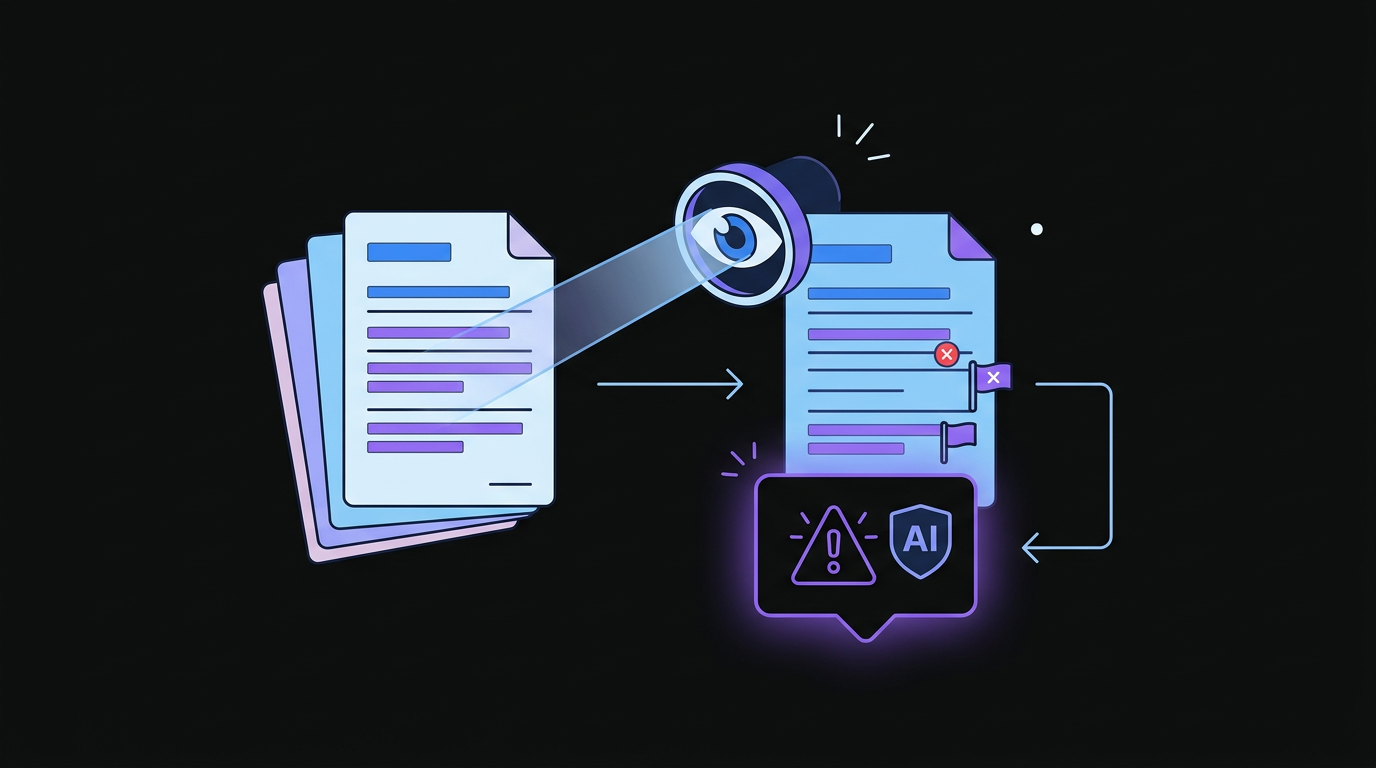 False positives occur when human-written content is incorrectly flagged as AI, often due to highly structured or technical writing styles.
How AI Content Checkers Actually Work
Understanding the mechanics helps you interpret results accurately and choose the right tool for your needs. Modern AI detection uses several complementary approaches, and the best tools combine all of them.
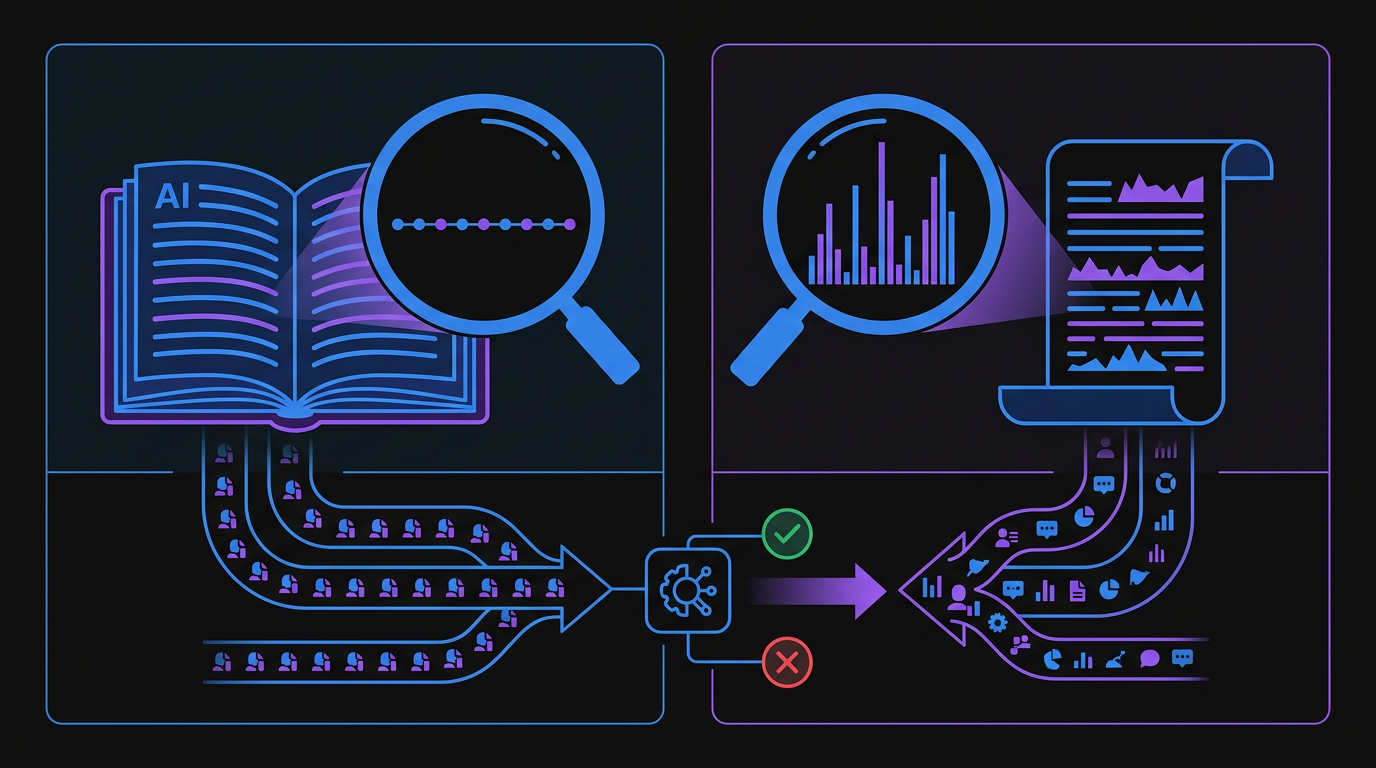 AI content detection relies on measuring statistical signals like perplexity and burstiness to differentiate human writing from machine-generated text.
Perplexity: Measuring Unpredictability
Perplexity quantifies how "surprising" a piece of text is to a language model. It measures how well an AI can predict the next word in a sequence. Low perplexity means the text follows highly predictable patterns: words appear exactly where an AI would expect them. Example: "Content marketing is a powerful way to grow your business. It helps you build trust, drive traffic, and increase conversions."
High perplexity means the text contains unexpected word choices, creative metaphors, or unusual phrasing. Example: "Content marketing is closer to gardening: you overwater for months, stare at empty dirt, then one random post you barely remember writing starts printing customers."
AI models are trained to produce low-perplexity text: smooth, expected, grammatically perfect sequences. When a detector sees extended passages of very low perplexity, it raises a flag. This technique originates from the original GPTZero research paper published in 2023.
Burstiness: Analyzing Rhythm Variation
Burstiness measures the variation in sentence structure and complexity throughout a text. Human writing naturally ebbs and flows: short punchy sentences mix with longer, complex ones; occasional fragments appear for emphasis; clause density and vocabulary sophistication vary across paragraphs. AI output tends toward uniformity, with consistent sentence length, similar complexity levels, and predictable structural patterns across entire documents.
Neural Pattern Recognition
Advanced detectors use machine learning models trained on massive datasets containing millions of human-written documents (books, articles, essays) alongside corresponding AI-generated samples from GPT-4, Claude, Gemini, and other models. These classifiers learn subtle patterns invisible to statistical analysis: overuse of certain transition words ("Furthermore," "Moreover," "Additionally"), preference for formal synonyms ("utilize" over "use"), generic openings and closings ("In today's digital age..."), and lack of personal anecdotes or specific details.
Watermark Detection
Some newer models, particularly those developed by OpenAI in collaboration with MIT's Computer Science and AI Laboratory, embed statistical watermarks in generated text. These are subtle patterns of token selection that serve as fingerprints. Specialized detectors can identify these signatures, though watermarks can be partially removed through paraphrasing or minor edits.
The Arms Race Reality
AI detection is an ongoing arms race. As language models improve at mimicking human writing, detectors must adapt. No tool achieves 100% accuracy, and claims otherwise warrant skepticism. The best approach combines multiple detection signals with human judgment. A 2024 study in Nature Machine Intelligence found that ensemble detection methods combining perplexity, burstiness, and neural classifiers outperformed single-method approaches by 18 percentage points in F1 score.
Key Features to Look for in an AI Content Checker
Not all detection tools are created equal. When evaluating options, prioritize these capabilities.
Accuracy Metrics
Look for tools that publish their testing methodology and accuracy rates across different AI models. The best detectors provide specific accuracy rates for GPT-4, Claude, Gemini, and other major models; false positive rates on human-written text; and performance on mixed content (human-edited AI drafts).
Detailed Analysis
Basic tools give you a percentage score. Superior options provide sentence-level highlighting showing which specific sentences triggered detection, confidence intervals showing how certain the tool is about its assessment, and mixed content detection that identifies human-written sections within AI drafts.
File Format Support
Consider your workflow. Most tools support plain text pasting for quick checks and document uploads (PDF, DOCX) for full manuscripts. URL scanning for published content and OCR capabilities for scanned documents are differentiating features that justify premium pricing for document-heavy teams.
API and Integration
Organizations processing content at scale need REST API access for automated scanning, browser extensions for on-the-fly checks, integration with content management systems, and batch processing for large document sets.
Privacy and Security
This is critical for sensitive content. Verify data retention policies (does the tool store your text?), encryption standards, compliance with GDPR, CCPA, and other regulations, and options for on-premise deployment.
Comparison of Top AI Content Checkers (2026)
We tested the leading tools across accuracy, usability, and value.
Slop Detector (godigitalapps.com/api/scan)
Best for: Quick, accurate checks without signup friction.
Our own Slop Detector focuses on speed and accuracy for everyday use cases. It is designed for content creators, marketers, and educators who need reliable detection without complexity.
Key Features:
- Fast analysis with clear percentage scores
- Detection across GPT-4, Claude, Gemini, and other major models
- Simple, distraction-free interface
- No account required for basic usage
- API available for integration
Pros: Zero-friction access, transparent scoring methodology, optimized for web content and marketing copy.
Cons: Lacks advanced enterprise features like batch processing. No built-in plagiarism detection.
Pricing: Free tier available; API access on paid plans.
GPTZero
Best for: Educators and academic institutions.
Created by Edward Tian at Princeton University in 2023, GPTZero pioneered the perplexity/burstiness approach and continues to innovate for classroom settings. The platform now serves over 4 million users, the majority of whom are educators.
Key Features:
- Detailed writing analysis with highlighted AI sections
- "Human Writing Report" with readability metrics
- Teacher dashboard for classroom management
- Chrome extension for checking Google Docs
Pros: Strong track record in academic environments, regularly updated for new AI models, clear documentation of detection methodology.
Cons: Premium features require subscription. Occasional false positives on technical writing.
Pricing: Free for basic use; $10-15/month for educators.
Originality.ai
Best for: SEO agencies and content publishers.
Built specifically for content marketing workflows, Originality.ai combines AI detection with plagiarism checking and readability scoring. The platform was one of the first to offer detection tuned specifically for GPT-4 and GPT-4o outputs.
Key Features:
- 99%+ accuracy claim for GPT-4 content (independent verification recommended)
- Team dashboards for collaborative workflows
- Batch upload capabilities
- Site scan feature for auditing published content
Pros: Purpose-built for publishing workflows, combines multiple quality checks in one tool, strong API for enterprise integration.
Cons: Premium pricing compared to alternatives. English-only support. False positives reported on edited human content.
Pricing: Pay-as-you-go or subscription starting at $14.95/month.
Copyleaks
Best for: Enterprise and multi-language needs.
Copyleaks offers one of the most comprehensive solutions, with AI detection, plagiarism checking, and code analysis in a single platform. Support for 30+ languages makes it the strongest choice for international organizations.
Key Features:
- Supports 30+ languages
- AI-generated code detection
- LMS integration for educational institutions
- Real-time analysis with API access
Pros: Robust enterprise features, strong multilingual support, combines AI and plagiarism detection effectively.
Cons: Interface can feel complex for casual users. Higher false positive rate on creative writing.
Pricing: Tiered plans starting at $9.99/month.
Winston AI
Best for: Document-heavy workflows.
Winston AI distinguishes itself with OCR capabilities, making it ideal for checking scanned documents, handwritten notes, and PDFs. This makes it uniquely useful for legal teams and academic institutions dealing with physical document submissions.
Key Features:
- OCR support for images and PDFs
- Color-coded confidence highlighting
- Project organization for content teams
- Printable reports for documentation
Pros: Unique OCR capabilities, clean intuitive interface, good for document-based workflows.
Cons: OCR accuracy varies with document quality. Premium pricing for full feature set.
Pricing: Free trial; plans from $12/month.
QuillBot AI Detector
Best for: Writers who also need paraphrasing.
From the popular writing assistant company, QuillBot's detector integrates with their broader suite of writing tools. It is most valuable as part of a QuillBot subscription rather than as a standalone detection tool.
Key Features: Integration with QuillBot paraphraser, quick analysis for shorter texts, part of comprehensive writing toolkit.
Pros: Seamless workflow if already using QuillBot. Fast results. Free tier available.
Cons: Less accurate than specialized tools. Limited standalone value.
Pricing: Free tier; premium plans from $9.95/month.
Use Cases: Who Needs AI Content Checkers?
Different audiences have distinct needs. Here is how various professionals use detection tools effectively.
For Educators and Academic Institutions
Primary Concerns: Academic integrity, fair assessment, student learning.
AI detection works best as a screening tool, not a verdict system. Set clear policies on AI tool usage in syllabi. Use detection on submissions as a first pass. Review flagged content manually, and never rely solely on scores. Use results to guide conversations about appropriate AI use. Consider detection-resistant assessment methods like oral exams and in-class writing for high-stakes assessments.
Recommended Tools: GPTZero, Copyleaks, Turnitin (if available through institution).
For Content Writers and Copywriters
Primary Concerns: Maintaining voice authenticity, client transparency, quality assurance.
Self-check drafts before submission to ensure human voice is preserved through the editing process. Document AI usage for clients who require disclosure. Scan client-provided content to verify originality claims. Use detection feedback to identify over-edited sections that sound robotic.
Recommended Tools: Slop Detector, Originality.ai, Winston AI.
For SEO Professionals and Publishers
Primary Concerns: Content quality, search rankings, editorial standards.
Screen freelance submissions for AI-generated content as a first step in your editorial pipeline. Audit existing content libraries for quality issues using batch processing. Verify guest post submissions meet authorship standards. Do not reject AI-assisted content outright: evaluate quality independently instead.
Recommended Tools: Originality.ai, Copyleaks, Slop Detector (for quick checks).
For Recruiters and HR Teams
Primary Concerns: Authentic candidate assessment, skill verification.
Use detection as one signal among many when reviewing cover letters and writing samples. Focus on skill demonstration through interviews and live writing tasks rather than automated scoring alone.
Recommended Tools: Slop Detector, GPTZero.
For Legal and Compliance Teams
Primary Concerns: Documentation authenticity, regulatory compliance.
Verify authenticity of submitted declarations and statements. Screen regulatory filings for AI generation. Maintain audit trails for document verification using enterprise-grade tools with proper documentation.
Recommended Tools: Copyleaks, Winston AI.
Interpreting Results: What the Numbers Actually Mean
Understanding detection scores prevents misinterpretation and inappropriate use.
Score Ranges:
- 0-20% AI probability: Very likely human-written.
- 20-50% AI probability: Uncertain, requires human review.
- 50-80% AI probability: Likely AI-generated or heavily AI-edited.
- 80-100% AI probability: Very likely AI-generated.
What to Do With Results:
Low scores (0-30%) indicate content is likely human-written. Proceed with normal workflow. If the text feels robotic despite low scores, trust your judgment.
Medium scores (30-70%) represent the gray zone. Review highlighted sections manually. Consider requesting additional drafts or process documentation. Look for mixed signals: some sections human, others AI.
High scores (70-100%) are a strong indication of AI generation. Review for quality regardless of source, since AI content can be excellent. If AI use violates your policies, address directly with the creator. Document your findings for potential disputes.
Reducing False Positives
If human-written content is getting flagged: vary sentence length by mixing short statements with longer complex ones; add personal details like specific anecdotes and experiences; use contractions, which AI often avoids; inject opinion by stating preferences and taking positions; break patterns by avoiding repetitive transition words; and read aloud, since robotic text is often hard to speak naturally.
Limitations and Ethical Considerations
Technical Limitations
Paraphrased content becomes harder to detect when heavily edited. Hybrid content (human-edited AI drafts) often evades detection. New model versions require updated detectors, creating a detection lag. Accuracy varies significantly across languages for non-English text.
Ethical Concerns
Privacy requires understanding that detection tools process your text. Verify each tool's data policies before submitting sensitive content.
Bias affects certain groups disproportionately. A 2023 study by Stanford researcher James Zou found that five major AI detectors showed higher false positive rates for essays written by non-native English speakers compared to native speakers, with differences of up to 54 percentage points.
Overreliance on detection scores incentivizes gaming the system rather than genuine improvement in writing quality.
Best Practices for Ethical Use
- Never use detection scores punitively without human review.
- Be transparent about your detection practices.
- Consider the power dynamic (employer/employee, teacher/student).
- Focus on outcomes (quality, learning) rather than process (how it was written).
- Keep detection as one tool in a broader quality assessment toolkit.
The Future of AI Content Detection
Improved Accuracy
Next-generation detectors will use larger training datasets with more diverse human writing, incorporate multimodal analysis (analyzing writing process, not just output), and develop specialized models for different domains (academic, creative, technical).
Industry Standards
The Coalition for Content Provenance and Authenticity (C2PA), backed by Adobe, Microsoft, Intel, and the BBC, is developing open standards for content provenance metadata. These standards will allow AI-generated content to be identified at the metadata level rather than relying solely on linguistic pattern detection.
The Human Element
The most reliable detection combines expert human reviewers for flagged content, process-based verification (outlines, drafts, revisions), and relationship-based trust (known contributors versus anonymous submissions). Technology assists; human judgment decides.
Conclusion: Choosing the Right AI Content Checker
The best AI content checker depends on your specific needs. For quick, no-friction checks, Slop Detector offers fast, accurate analysis without signup barriers. For educational settings, GPTZero provides classroom-specific features and educator support. For content publishing workflows, Originality.ai bundles detection with plagiarism and readability checks. For enterprise needs, Copyleaks delivers multilingual support and robust API access.
AI detection tools are assistants, not arbiters. Use them to guide attention, not make final judgments. The goal is to ensure quality, transparency, and authenticity in how content is created and consumed. Start with a free tool like Slop Detector to understand your specific needs, then invest in premium solutions when your volume or requirements justify the cost.
Frequently Asked Questions
Are AI content checkers 100% accurate?
No AI content checker achieves 100% accuracy. Even the best tools have false positive and false negative rates. A 2024 study in Nature Machine Intelligence found that ensemble detection methods achieve approximately 85-90% accuracy on unedited AI text, but accuracy drops significantly on heavily edited or mixed content. Use detection tools as screening aids that guide human review, not as definitive proof of AI authorship.
Can AI-generated content be detected if it's heavily edited?
Detection becomes significantly harder with extensive human editing. Mixed content (human-edited AI drafts) often returns uncertain scores in the 30-70% range. Detectors look for statistical patterns like perplexity and burstiness, and thorough human editing disrupts those patterns. This is why process-based verification (requesting outlines, drafts, and revision histories) is more reliable than detection scores alone for high-stakes assessments.
Do AI detectors store my text?
Policies vary significantly by tool. GPTZero retains data for model training unless you opt out. Originality.ai stores scans in your account history. Some enterprise tools offer zero-retention options for sensitive content. Always check each service's privacy policy before submitting confidential material.
Why was my human-written text flagged as AI?
The most common causes of false positives are highly structured writing with predictable organization, extensive editing for clarity that removes natural variation, technical subject matter with precise and predictable language, and non-native English writing that follows grammatical rules more rigidly than native speakers. A 2023 Stanford study found that AI detectors showed false positive rates up to 54 percentage points higher for non-native English speakers than for native speakers on the same type of content.
Which AI content checker is best for educators?
GPTZero is the leading choice for educators. It was purpose-built for the classroom by Princeton student Edward Tian, features a teacher dashboard for managing multiple submissions, provides sentence-level highlighting, and integrates with Google Docs via a Chrome extension.
Should I reject content just because an AI detector flagged it?
No. The correct process is: use the detection score to flag content for closer review, examine flagged passages manually for quality and authenticity, consider whether the content meets your quality standards regardless of how it was produced, and if AI use violates your explicit policies, address it directly with the creator. Quality and policy compliance matter more than origin.
Ready to check your content? Try our Slop Detector for fast, accurate AI detection without the friction.
Related Articles
Losing 10+ hours a week to manual work?
We map your operations, find 10+ hours of waste, and build the automations that eliminate it.
Book a Free Intro Call