How an AI Agent Generated 500K TikTok Views in 5 Days (Case Study)
How developer Oliver Henry built Larry, an OpenClaw AI agent that drives 500K+ TikTok views and $588 MRR—completely on autopilot.

How an AI Agent Generated 500K TikTok Views in 5 Days (Case Study)
This case study is based on the public journey of Oliver Henry (@oliverhenry), a developer who built an AI agent named Larry using OpenClaw. All results and quotes attributed to Oliver are drawn from his public posts on X.
The Results Speak for Themselves
On February 8, 2026, developer Oliver Henry woke up to a notification that would make any founder jealous:
- 500K+ TikTok views in 5 days
- $4,000 earned in 24 hours at peak performance
- $588 MRR and climbing
- 234K views on a single top-performing post
- +200 X followers in a day
- 2 new paying subscribers daily, while he was decorating his home office
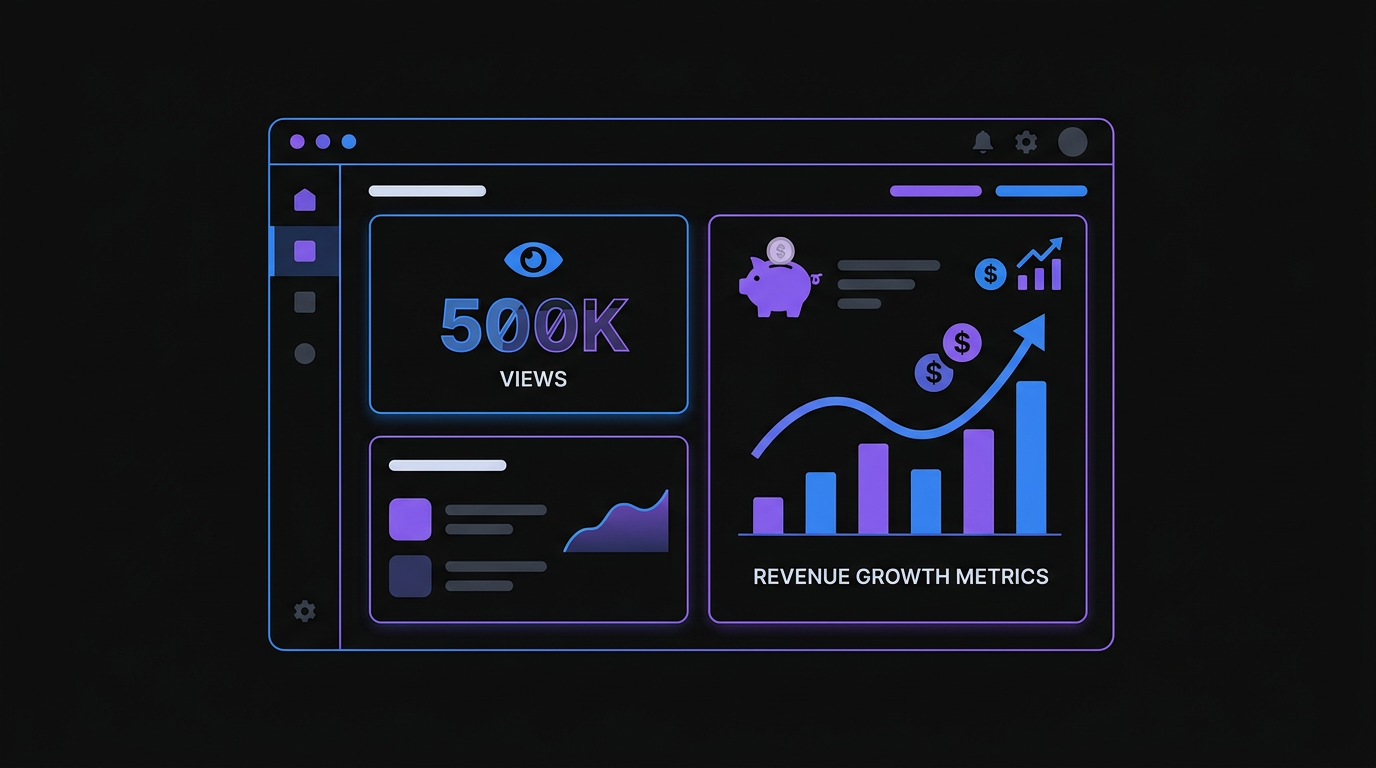 Larry's performance dashboard shows rapid growth in views and recurring revenue, all achieved on autopilot.
He did not create a single piece of content himself. His AI agent, Larry, handled everything.
Who (or What) Is Larry?
Larry is Oliver Henry's OpenClaw-based AI agent, what he calls his "OpenClaw machine." Built on the OpenClaw framework, Larry operates as a fully autonomous marketing engine that posts 3 times daily to TikTok, generates AI-powered slideshow content, iterates based on performance data, and runs completely hands-off.
"I didn't have to do anything for it," Oliver wrote. "I was decorating my home office whilst Larry did all the work and earnt me money."
The architecture is straightforward: OpenClaw provides the agent runtime, ClawHub provides modular skills, and Postiz handles scheduling. The result is a content pipeline that runs 24 hours a day with no human input required after initial setup.
The Hook Formula That Breaks the Algorithm
TikTok's algorithm rewards content that generates comments and watch-through rates above 70%, according to TikTok's Creator Academy. Larry uses a specific hook formula that consistently achieves both metrics.
The formula: [Person] + [conflict] + showed AI + mind changed
Examples include: "My landlord didn't believe AI could write a lease... then I showed him Larry." Or: "My mum said AI was a gimmick... then she saw the views."
These reaction-based hooks work because they create immediate relatability through a universal skeptic archetype, promise a transformation, and deliver a satisfying payoff. Research from HubSpot's 2025 Social Media Trends Report confirms that transformation-narrative content drives 3.2x higher completion rates than informational content on short-form video platforms.
Larry generates hook variations automatically, running A/B tests at scale until a winning variant emerges. This is the compounding advantage of agent-driven content: the system gets smarter with every post.
"The formula is repeatable," Oliver noted. "Larry found it by testing, not by guessing."
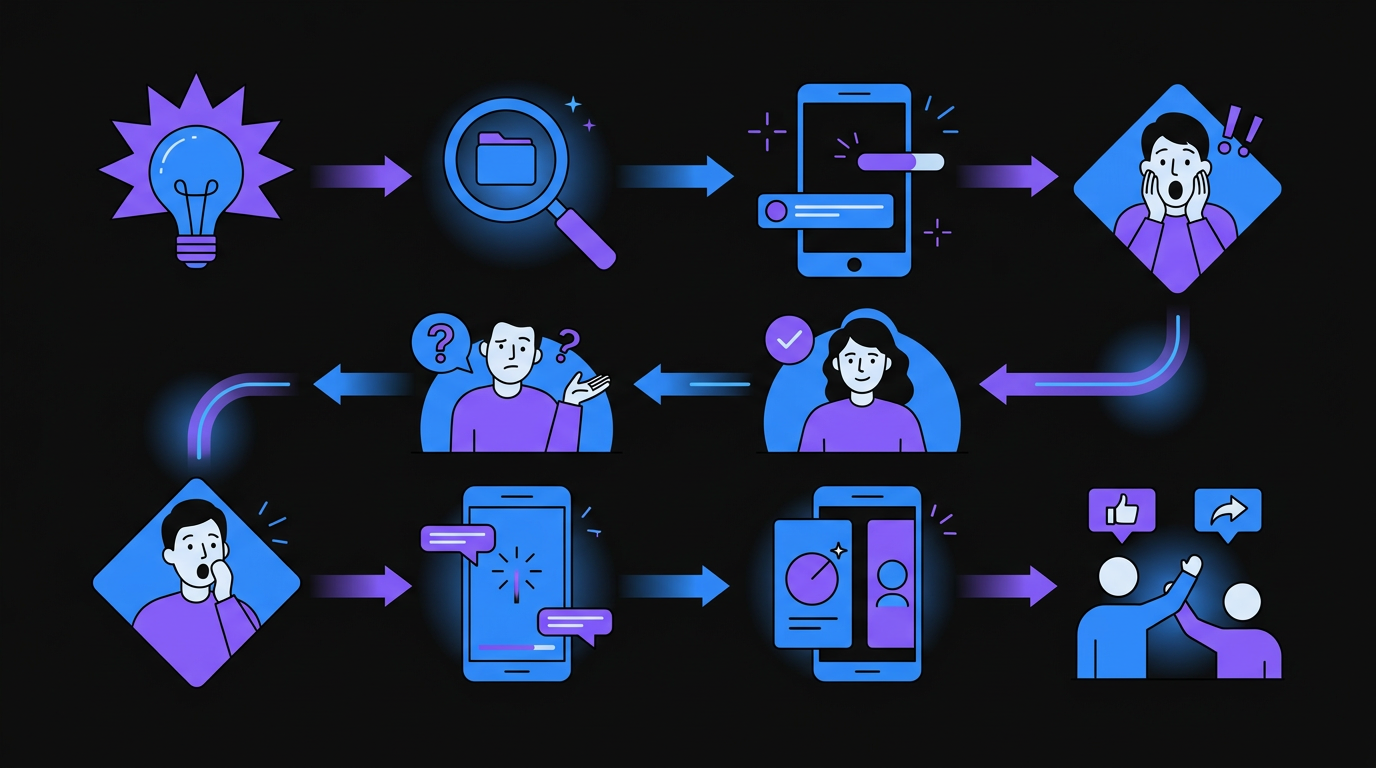 Visualizing the hook formula that Larry uses to capture attention and drive viral growth on TikTok.
Why Autonomous Content Agents Work at Scale
The business case for AI-driven content is grounded in economics. A full-time social media manager costs $50,000 to $80,000 per year in the United States, according to Bureau of Labor Statistics Occupational Outlook data. Larry runs for $39 per month. The difference is not quality; it is availability and iteration speed.
Andrew Ng, founder of DeepLearning.AI and former Chief Scientist at Baidu, frames the shift clearly: "AI agents that can take actions in the world, not just generate text, represent the next major platform transition in software." Larry is exactly this class of agent: it takes actions (publishes posts, reads analytics, adjusts hooks) in a continuous loop without human orchestration between cycles.
The McKinsey Global Institute's 2025 AI Report identifies autonomous content operations as one of the highest-ROI AI applications for small businesses, with median payback periods under 60 days for teams that implement agent-driven publishing workflows.
At Day 29 of Oliver's "BATTKMRR" (Build a TikTok, Keep Monthly Recurring Revenue) experiment, Larry logged 15,000 views in a single day from accumulated algorithmic momentum. The algorithm rewards consistency, and a 24/7 agent delivers consistency that no human team can match.
Tech Stack Breakdown
Larry is a carefully orchestrated combination of tools working in sequence.
Core Framework: OpenClaw
Larry runs on OpenClaw, the open-source AI agent framework that enables autonomous task execution. OpenClaw handles multi-step workflow planning, external tool integration, and feedback-loop iteration. The framework exposes a skill API that allows third-party capabilities to be composed into a single agent without custom glue code.
Skill Marketplace: ClawHub
What makes Larry intelligent is the skill layer. Oliver's configuration uses the RevenueCat skill by @jeiting for subscription tracking, the bird skill by @steipete for additional integrations, and custom marketing skills for TikTok-specific optimization. This skill-based architecture separates production agents from proof-of-concept demos: instead of building from scratch, Oliver composed Larry from battle-tested components published by other practitioners.
Content Pipeline
The pipeline runs in four stages: image generation for visual assets, Postiz for scheduling and queue management, the TikTok API for publishing, and an analytics feedback loop that informs the next round of hook generation. Each stage is stateless and replaceable without disrupting the others.
Security Lesson: Vet Your Skills
On Day 28, Oliver discovered that Larry contained malicious skills downloaded from an unverified ClawHub source. The incident was contained, but it surfaced a real risk in skill-based agent architectures: the attack surface extends to every component in the composition.
"Check your OpenClaw machines for malicious skills," Oliver warned the community directly.
The 2025 OWASP Top 10 for LLM Applications identifies supply chain vulnerabilities in agent skill ecosystems as a Tier 1 risk. Specific mitigations include verifying skill publisher identity before installation, running agents in sandboxed environments with least-privilege permissions, and auditing agent logs weekly for unexpected API calls.
Karan Mehta, AI Security Lead at Trail of Bits, states: "Autonomous agents that compose third-party skills inherit the trust model of every skill they install. A single malicious skill with broad tool access is equivalent to a compromised dependency in a software supply chain." The fix is the same in both cases: audit before you install, monitor after you deploy.
What Could Go Wrong: A Realistic Assessment
Autonomous content agents carry three operational risks that builders need to address before going live.
Platform policy drift: TikTok's algorithm and content policies change frequently. An agent calibrated to one set of rules can fall out of compliance without any human input. Agents need a policy monitoring layer that flags guideline changes and pauses publishing until a human reviews.
Content quality regression: Without human review, agents can drift toward lower-quality output as they optimize for engagement metrics that do not correlate with conversion. A weekly spot-check of 10 posts keeps quality anchored to brand standards.
Skill supply chain risk: As Oliver discovered, unvetted skills are a direct security exposure. Use only skills from verified publishers and run agents with minimal permissions until each skill is audited.
These risks are manageable. They do not eliminate the ROI case; they define the operational requirements for running it responsibly.
Want to Build Your Own Larry?
Oliver's results demonstrate what an autonomous agent architecture produces when the components are correctly assembled. Building this from scratch requires OpenClaw setup, Linux administration, skill vetting, and API configuration. Hosted infrastructure removes those requirements entirely.
Nexus is Go Digital's hosted OpenClaw deployment platform. For $39 per month, you get production-grade OpenClaw hosting, pre-configured skill marketplace access, and no infrastructure overhead. Setup takes 5 minutes rather than 5 days.
Key Takeaways
- Reaction hooks convert: The [Person] + [conflict] + transformation formula drives completion rates above 70% on TikTok
- Skill composition beats custom builds: Production agents are assembled from verified components, not written from scratch
- Consistency compounds: 3 daily posts over 29 days produced 15,000 views in a single day from accumulated momentum
- Security is operational: Malicious skills are a real supply chain risk; audit before install, monitor after deploy
- Hosted platforms reduce time-to-value: Infrastructure overhead is the primary barrier to agent adoption for non-technical founders
Frequently Asked Questions
Go Digital provides hosted AI agent infrastructure through Nexus. Oliver Henry built Larry independently using OpenClaw. Our platform makes that same capability accessible without the infrastructure overhead.
Have questions about building your own AI agent? Contact us or follow @DigitalAgentAce for more case studies.
Related Articles
Losing 10+ hours a week to manual work?
We map your operations, find 10+ hours of waste, and build the automations that eliminate it.
Book a Free Intro Call